
Most people assume Direct Support Professional work requires a specialized degree or a medical license. In Nevada, it doesn’t. If you’re at least 18 years old and have a high school diploma or GED, you already meet the state’s baseline requirement. Here’s what else Nevada asks for, what training and certification actually involve, and how to apply to Opportunity Village.
What a Direct Support Professional Really Does
A Direct Support Professional (DSP) helps people with intellectual and developmental disabilities build the skills and routines they need to live independently, at home, at work, and in the community. The work is hands-on: teaching daily living skills, providing job coaching, running errands and outings, and offering personal care when it’s needed. It’s relationship-driven work with the same people, day after day.
Do You Need a Degree to Become a DSP in Nevada?
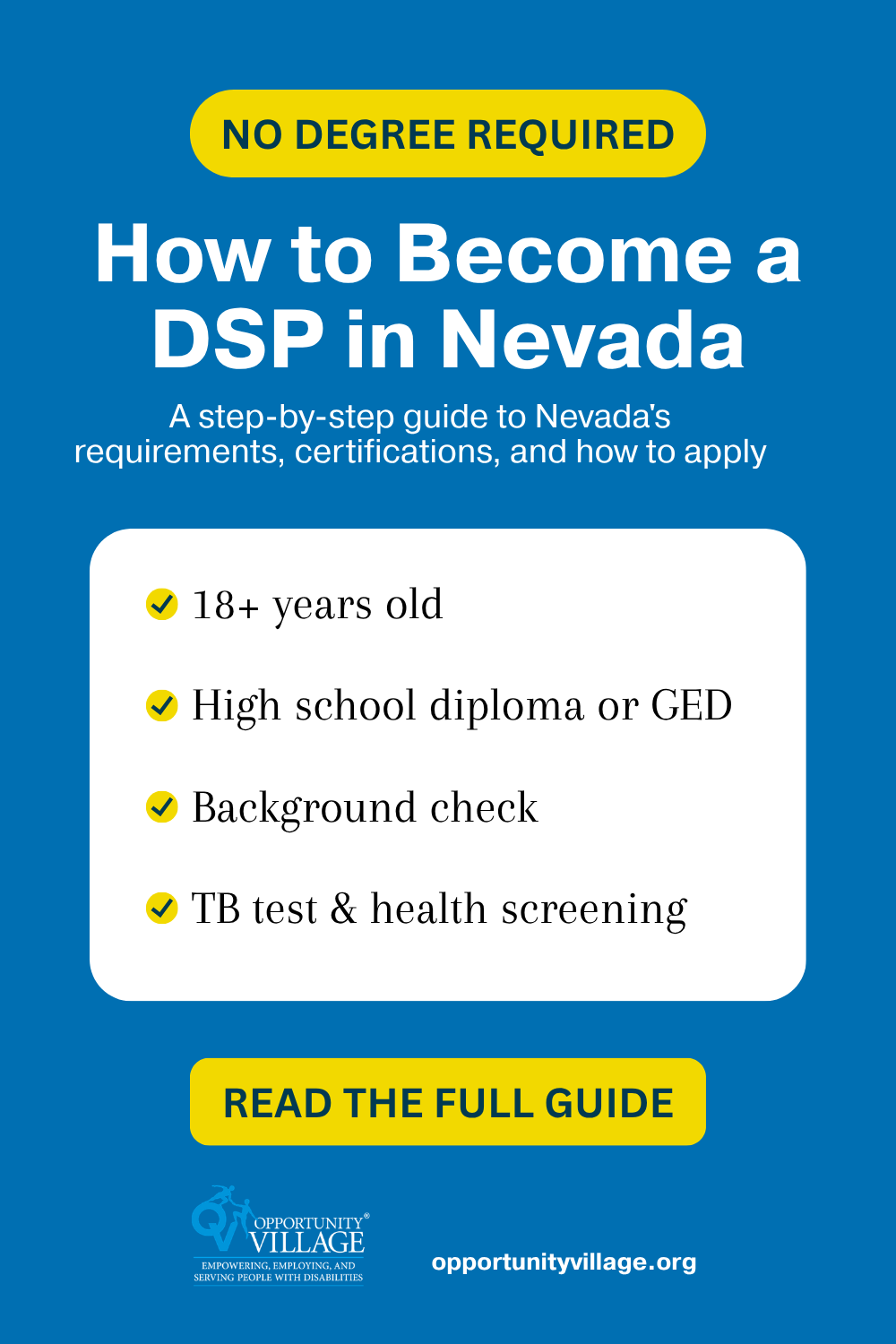
No. Nevada doesn’t require a college degree, nursing license, or any specialized credential to become a DSP. The state’s baseline is straightforward: you need to be at least 18 years old and hold a high school diploma or GED. Background checks, health clearances, and certification all happen during onboarding, once you’re hired.
Nevada’s Requirements to Become a DSP
Use this as your checklist before you apply.
- Age and education: at least 18 years old, high school diploma or GED
- Background check: state and federal background check, plus employment references
- Health clearance: TB test and other required health screenings before your start date
- Driver’s license: some DSP roles require a valid driver’s license and proof of insurance, especially positions that involve transporting the people we support
Certifications and Training Paths in Nevada
Nevada doesn’t require a single universal DSP certification before hire, but a few credentials shape the field.
NADSP (the National Alliance for Direct Support Professionals) offers a national certification built around a defined set of core competencies for direct support work, and many employers treat it as a mark of professional development rather than a hiring requirement (nadsp.org).
A Qualified Behavioral Aide (QBA) credential applies to Medicaid-funded positions that involve behavioral support, and is common across DSP employers in Nevada.
What Opportunity Village Looks for in a DSP Candidate
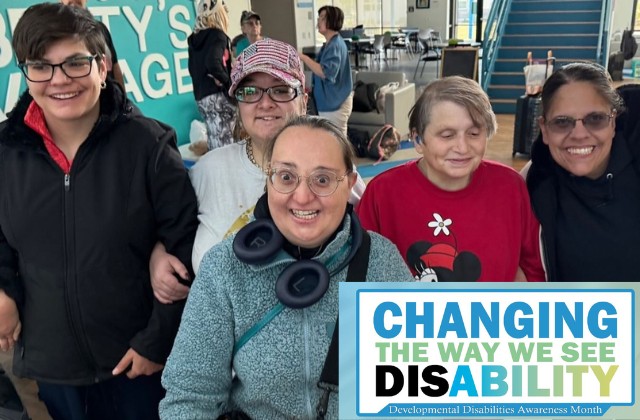
One out of every three Opportunity Village employees identifies as having a disability. That shapes what we look for in a DSP: someone who can support colleagues just as much as the people we serve.
Beyond Nevada’s baseline requirements, that means patience, reliability, and the ability to stay calm and consistent for the people you support, even on hard days. DSPs also coordinate closely with each person’s broader support team, so working well with others counts as much as working well one-on-one. If you’re dependable and willing to learn on the job, you already have what this role asks for.
What to Expect for Pay, Schedule, and Growth in Nevada
DSP pay in Nevada varies by employer, experience, and the specific role. Schedules in this field run both full-time and part-time, since many programs operate mornings, evenings, and weekends to match the needs of the people they support. If flexibility matters to you, that’s worth asking about directly when you apply.
How to Apply to Opportunity Village
- Review current DSP openings on our careers page.
- Submit your application online.
- Complete the required background check and health clearance steps.
If you meet Nevada’s baseline, 18 or older with a high school diploma or GED, you already qualify to apply. We’ll walk you through everything else.
Visit our careers page to see current Direct Support Professional openings in Las Vegas.
Frequently Asked Questions
Do you need a degree to become a DSP in Nevada?
No. Nevada requires a high school diploma or GED and a minimum age of 18. No college degree or medical license is required.
How long does DSP training take?
It varies by employer. Most Nevada DSP roles start with several days of paid orientation covering topics like safety procedures, first aid and CPR, and abuse prevention, followed by hands-on shadowing with an experienced DSP before working independently. Training doesn’t stop after orientation either. State-funded programs generally require DSPs to complete continuing education hours every year on the job.
What’s the difference between a DSP and a caregiver?
A caregiver typically provides personal care and help with daily tasks. A DSP does that and more, including job coaching, skill-building, and community integration, with training centered on building independence.
Is DSP work full-time or part-time in Nevada?
Both. Many programs offer full-time and part-time schedules depending on the position and the needs of the people being supported.