
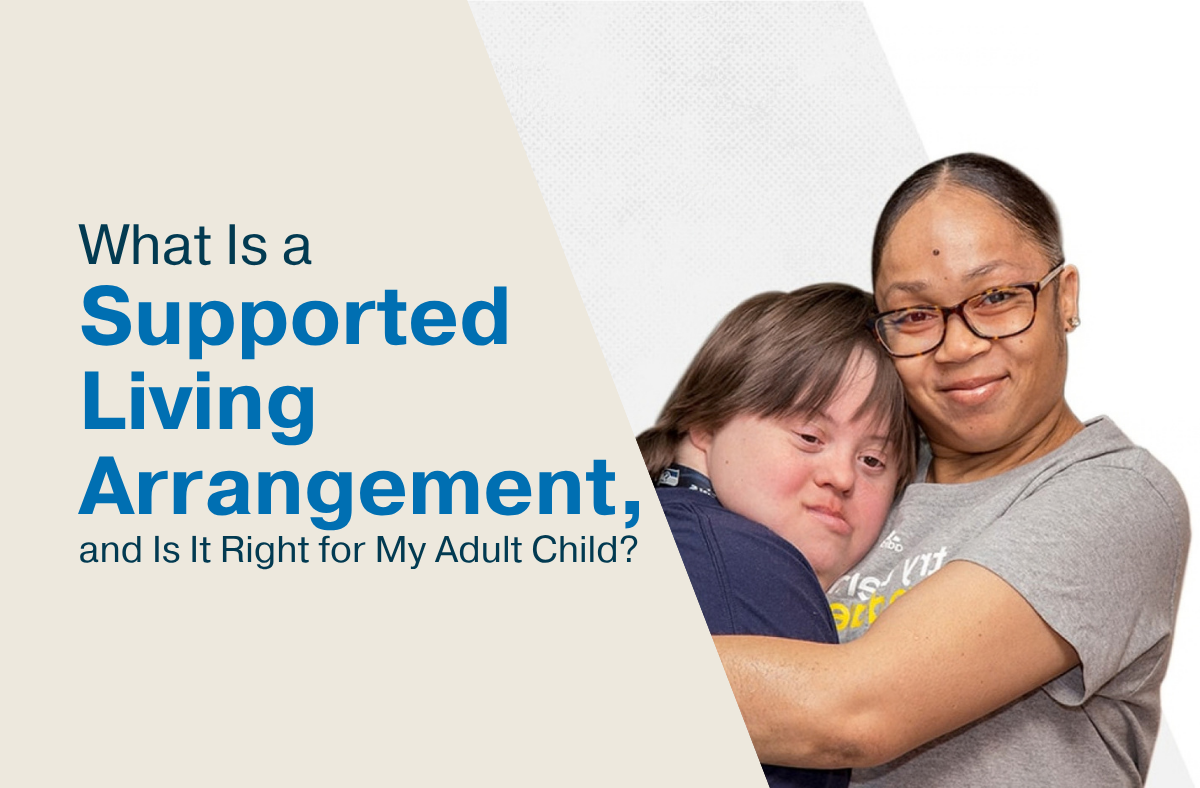
Every year, families across Southern Nevada reach the same fork in the road: their child ages out of the school system, or a parent realizes they can’t keep providing full-time care alone. A Supported Living Arrangement is built for that fork. Here’s what it means in practice, and how to tell if it fits your family.
What a Supported Living Arrangement Means
A Supported Living Arrangement is a program that helps an adult with an intellectual disability live in their own home, with the right amount of hands-on support built around them. That home can be their own apartment, a rented room, or your family’s home. The support comes to them there, instead of asking them to move into a group home, a nursing facility, or any kind of round-the-clock institutional setting.
How a Supported Living Arrangement Works Day to Day
Where Someone Lives
Most people in a Supported Living Arrangement live in their own home or apartment, a rented room, or a family member’s home. The program builds support around wherever that is, so no one has to move into a new setting just to get help.
What Support Looks Like
Support ranges from a few hours a week to daily hands-on help, depending on what someone needs. On Opportunity Village’s Supported Living Arrangement program, that includes:
- Money management: budgeting, learning to handle money, and completing transactions
- Home management: laundry, cleaning, and meal prep
- Personal care: hygiene routines and staying active, whether that’s walking, biking, or a video game like Just Dance
- Community outings: grocery shopping, bowling, and time at a recreation center
- Medical appointments: getting there and having support along the way
How much of each someone gets, and how often, comes down to what fits their life.
Who a Supported Living Arrangement Is For
A Supported Living Arrangement is built for an adult with an intellectual disability who wants more independence than a group home offers, and more support than living alone would allow.
Common Paths That Lead a Family Here
Three situations bring most families to this decision:
- Your child or dependent is aging out of the school system and needs a plan for what comes next.
- Your child or dependent wants to move out of the family home and build a life with more independence.
- You’ve been providing full-time care and you’re realizing you can’t sustain that alone forever.
If your family is in the first group, “Life After High School: Transition for Students With Disabilities” walks through the transition out of school in more detail. This post picks up from there.
Jorja, a participant in Opportunity Village’s Supported Living Arrangement program, is one example of what this looks like in practice.
She’s been working on independent living skills, including cooking, with guidance from OV’s support staff. She goes grocery shopping on her own and is building real skill in the kitchen. Her progress didn’t happen in a facility.
It happened in her own home, at her own pace, with support built around her goals.
Who Qualifies, and How Funding Works
Opportunity Village’s Supported Living Arrangement program serves adults with intellectual and developmental disabilities who receive Medicaid waiver funding in Nevada. That waiver, administered through Nevada’s Aging and Disability Services Division (ADSD), covers home and community-based services instead of facility-based care, which is what allows someone to get support while staying in their own home.
A Supported Living Arrangement vs. a Group Home vs. Staying at Home
The right setup depends on how much day-to-day support your child or dependent needs and wants. Here’s how a Supported Living Arrangement, a group home, and staying at home compare:
|
Opportunity Village’s Program
Supported Living Arrangement
|
Group Home | Staying at Home | |
|---|---|---|---|
| Where They Live | Their own home, apartment, or a family member’s home | A staffed home shared with other residents | The family home, full time |
| Day-to-Day Support | A few hours a week up to daily hands-on help, based on need | Staff on-site around the clock | Family provides all support |
| Independence Level | High. Built around living on their own terms with backup support | Moderate. Shared routines and shared staff | Depends entirely on family capacity |
| Best Fit When… | An adult with disabilities wants more independence than a group home offers, with more support than living alone | Round-the-clock supervision is the priority | Family can provide full-time care and wants to, for now |
How to Know if a Supported Living Arrangement is the Right Fit for Your Family
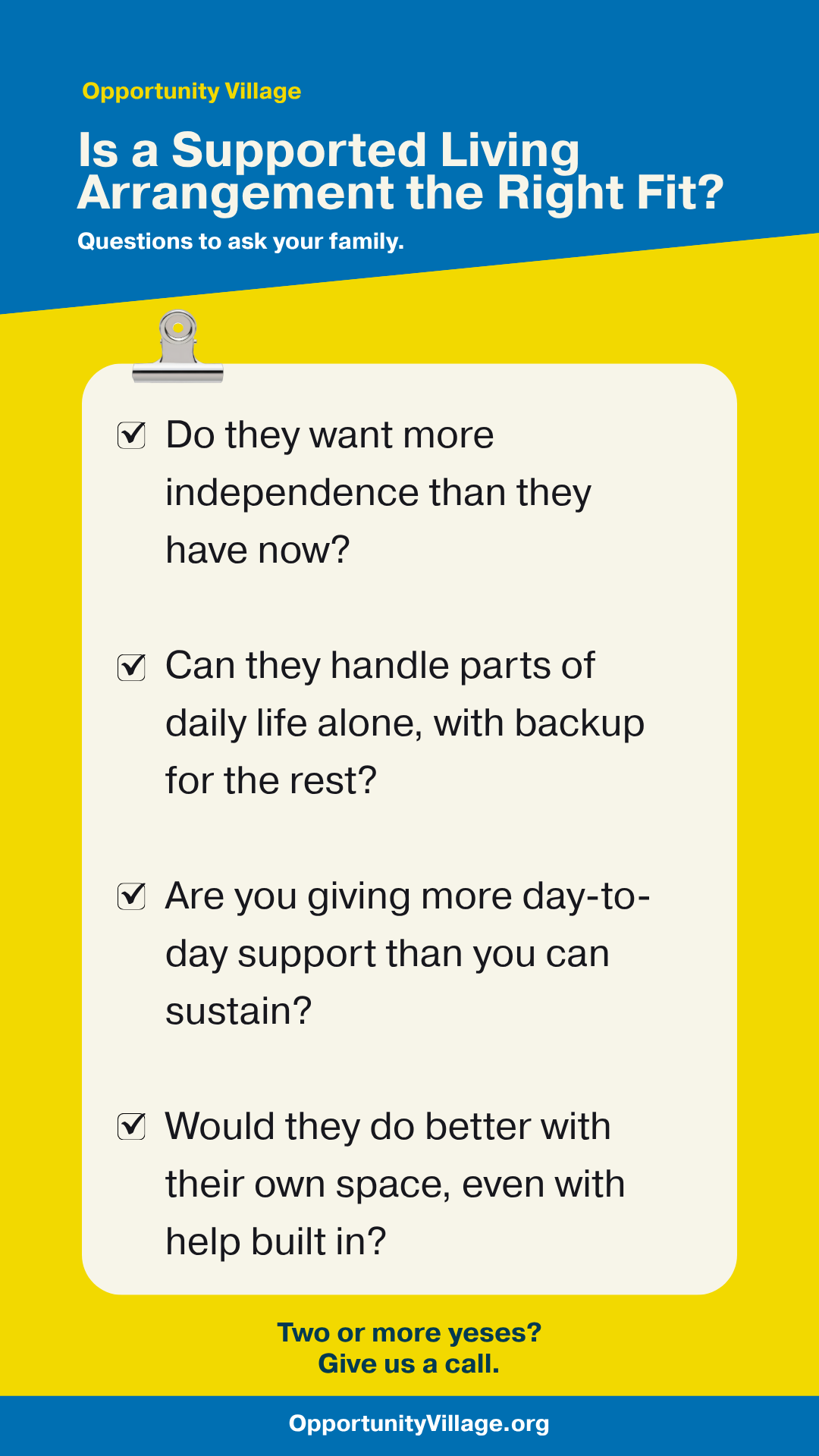
These four questions point most families toward an answer:
- Does your adult child want more independence than they currently have?
- Can they handle parts of daily life on their own, with backup for the rest?
- Are you providing more day-to-day support than you can keep up long term?
- Would your child do better with their own space, even with help built in?
If you answered yes to more than one, a Supported Living Arrangement is worth a conversation. And if you’re the person who’s been doing it all, reaching out for support is exactly the kind of planning that sets your child or dependent up for a stronger future, and takes care of you too.
Why This Support Comes From Opportunity Village
A Supported Living Arrangement through Opportunity Village comes out of 72 years of serving people with intellectual disabilities in Southern Nevada. OV is Nevada’s largest employer of people with intellectual disabilities, and one third of its own staff identify as having a disability. That’s the organization behind the team your family would be working with.
What to Expect if You Reach Out
A first conversation with Opportunity Village’s Supported Living Arrangement program is a conversation about goals.
Nicole Ashley, OV’s Residential Services Manager, and her team walk families through three steps: you reach out, you talk through what your child or dependent needs and wants, and together you build a personalized plan. Most families hear back within one to two business days.
For questions or more information, please contact:
Nicole Ashley
Residential Services Manager
[email protected]
Start the Conversation About a Supported Living Arrangement
Explore Opportunity Village’s Supported Living Arrangement Services to see how the program works, or go straight to How to Enroll if you’re ready to take the next step.
Frequently Asked Questions
Is a Supported Living Arrangement the Same as a Group Home?
No. A group home is a staffed residence shared with other people, with staff on-site around the clock. A Supported Living Arrangement supports someone in their own home, apartment, or family member’s home, with the amount of help built around what they actually need.
Who Qualifies for a Supported Living Arrangement in Nevada?
Opportunity Village’s program serves adults with intellectual disabilities who receive Medicaid waiver funding in Nevada, administered through the state’s Aging and Disability Services Division.
How Much Support Does a Supported Living Arrangement Include?
Support ranges from a few hours a week to daily hands-on help, depending on what someone needs. It can include money management, home management, personal care, community outings, and help getting to medical appointments.